
Emergency contraception • Timing matters • Pregnancy testing • Next steps
The Morning-After Pill
What you should know.

You’ve probably heard about the morning-after pill, also called emergency contraception. If you’re wondering whether you could be pregnant, learn how it works, what it may do, and the questions to consider next.
Safe, Reliable, Medically Accurate Information
How it Works
Common Questions Answered
Evidence-Based Information
What this page covers
1 What is the morning-after pill?
2 How does it work?
3 Can you still become pregnant?
4 What should you do next?
We See You
What You’re Probably Feeling Right Now

If you’re facing an unexpected pregnancy, you don’t have to sort through every question alone. Whether you’re considering the morning-after pill, wondering if you’re pregnant, or simply looking for honest information, you deserve a place where you can slow down, ask questions, and understand your options without pressure. We’re here to listen, provide medical information, and help you take your next step with confidence.
You don’t have to figure this out alone.
We’ve got you.
Feeling rushed to make a decision
Feeling pressured by someone else’s opinion
Wanting the full facts first what it does, the side effects, the risks
Scared to ask questions and need a place that feels safe and reliable with information you can trust
Feeling alone in this moment
Medically Accurate Information
What is the morning-after pill?

The morning-after pill isn’t a single drug. There are two drugs that are used as emergency contraception:
1. Plan B One-Step ®
- It’s a drug intended to be taken as soon as possible within the first 72 hours after unprotected sex or contraceptive failure (for instance, if a condom tears) to prevent pregnancy.
- It contains a high dose of a progesterone (levonorgestrel) that is found in many kinds of birth control pills.
- At the dosage found in Plan B One-Step, levonorgestrel may work on rare occasion to prevent an embryo from implanting in the uterus (see below).
- It is often referred to by the brand name that started it all—Plan B ® .
- It’s also available in generic forms.
2. ella ®
- This drug is supposed to be taken as soon as possible within 5 days of unprotected sex or contraceptive failure.
- ella is the trade name of the drug ulipristal acetate.
- It is chemically related to mifepristone (RU-486), the “abortion pill,” and works by a similar mechanism of action.
It is not possible for a woman to get pregnant about 26 days a month. Many of the days when women take the morning-after pill, it is impossible to get pregnant anyway. This fact makes “effectiveness” statistics for emergency contraception look much better than they really are.
What to Expect Physically
The Morning-After Pill Side Effects
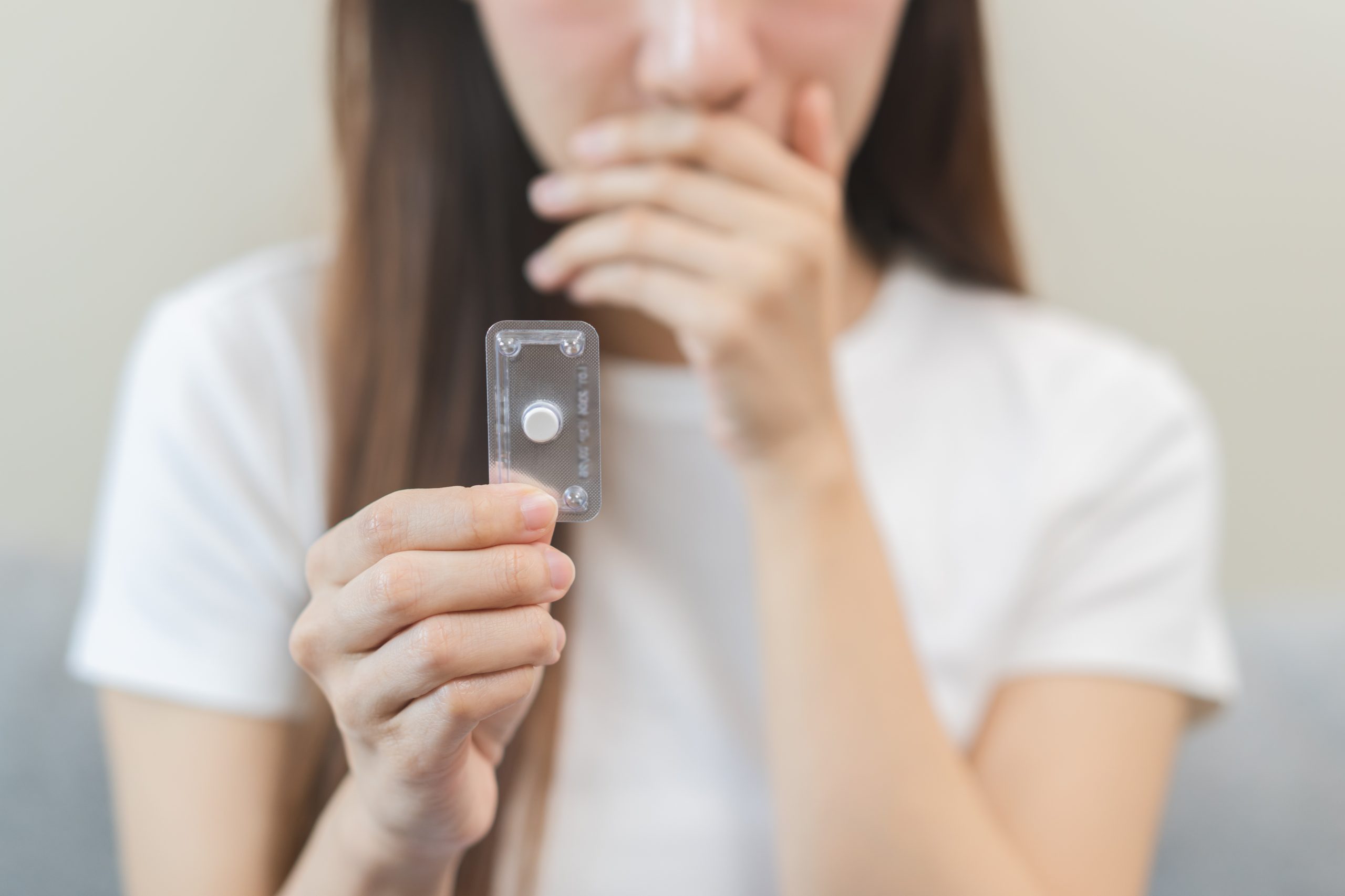
Knowing the morning-after pill side effects ahead of time matters — both so you’re not frightened by what’s expected, and so you know which signs mean you need urgent medical care. Here’s an honest breakdown.
Irregular and unpredicatable menstrual periods
Heavy bleeding and strong cramping are the intended effect of the second medication. Bleeding is often heavier than a period and can include clots.
Nausea, vomitting, diarrhea
Digestive side effects are common in the hours after taking misoprostol. They usually pass within a day.
Cramping and abdominal pain
Mild to moderate lower abdominal pain—similar to period cramps—is common.
When to seek emergency care
Your period is more than 7 days late, as this could be a sign that the pill did not work and you may be pregnant.You experience sudden, severe abdominal pain, which can be an indicator of an ectopic pregnancy.You experience symptoms of a severe allergic reaction, such as hives, wheezing, or swelling of the face, tongue, or throat.
Enter your zip code
Results shown here · Confidential · No account needed
Questions
Questions About the Morning-After Pill, Answered
Honest answers to the questions most women are afraid to ask out loud. If yours isn’t here, a real person is available right now — no judgment, no pressure either way.
Have a question that’s not here? Find a clinic near you — confidential, no pressure.
What is the morning-after pill?
The morning-after pill isn’t a single drug. There are two drugs that are used as emergency contraception:
1. Plan B One-Step ®
- It’s a drug intended to be taken as soon as possible within the first 72 hours after unprotected sex or contraceptive failure (for instance, if a condom tears) to prevent pregnancy.
- It contains a high dose of a progesterone (levonorgestrel) that is found in many kinds of birth control pills.
- At the dosage found in Plan B One-Step, levonorgestrel may work on rare occasion to prevent an embryo from implanting in the uterus (see below). 1
- It is often referred to by the brand name that started it all—Plan B ® .
- It’s also available in generic forms.
2. ella ®
- This drug is supposed to be taken as soon as possible within 5 days of unprotected sex or contraceptive failure.
- ella is the trade name of the drug ulipristal acetate.
- It is chemically related to mifepristone (RU-486), the “abortion pill,” and works by a similar mechanism of action. 2
How do they work?
Depending on where you are in your menstrual cycle, morning-after pill drugs could affect you in one of several ways:
1. Plan B One-Step
- It may prevent ovulation: The egg will not be released to meet the sperm—so fertilization, sometimes known as conception, can’t occur.
- It may affect the lining of your fallopian tubes so that sperm cannot reach the egg. This also prevents fertilization.
- It may irritate the lining of your uterus. If an egg has already been released and fertilized by the sperm, this irritation could make it harder for the embryo to implant in your uterus. 4
2. ella
- It may prevent ovulation: The egg will not be released to meet the sperm—so fertilization can’t occur.
- It also acts to block progesterone, a hormone produced by the ovaries which helps a woman’s body sustain a pregnancy. This reduces the chances that an embryo would successfully survive and grow in the uterus.
Are there side effects?
Yes.You may experience several short-term side effects when taking Plan B One-Step.
These include:
- nausea and vomiting
- irregular and unpredictable menstrual periods
- cramping and abdominal pain—which might also be the sign of an “ectopic pregnancy” (see next question)
- fatigue
- headache
- dizziness
- breast tenderness 5
Possible side effects for ella include:
- headache
- nausea and vomiting
- irregular bleeding or spotting
- cramping and abdominal pain—which might also be the sign of an ectopic pregnancy (see next question)
- fatigue
- dizziness
What is an ectopic pregnancy? And why does it matter?
- This is a potentially life-threatening condition in which a fertilized egg implants outside of the uterus—most often in the fallopian tubes.
- The morning-after pill won’t end an ectopic pregnancy.
- If you have severe abdominal pain three to five weeks after using the morning-after pill, or if you miss your next menstrual period, you should see your health-care professional to rule out a pregnancy (either ectopic or within the uterus).
- An embryo growing in a fallopian tube will require emergency care. 7
What happens if I use emergency contraception after fertilization?
- The high dose of levonorgestrel found in Plan B One-Step may irritate the lining of your uterus. That irritation may keep the embryo inside you from implanting, ending its life.
- With ella, the drug blocks progesterone, a hormone that helps your body maintain a pregnancy. While an embryo may have already been created, ella can keep it from implanting in your uterus and being sustained by your body, ending its life.
- If either of these happens, an abortion will occur, because each human life begins as an embryo.8
So, how can I know if an egg has been fertilized?
- That’s the problem—you can’t know.
- TBut we do know that sperm can reach the fallopian tubes mere minutes after intercourse, and if an egg has already been released, fertilization could occur.
- So, by the time you wake up on the “morning after,” a new human life may have already begun.
- If that’s the case, using emergency contraception might cause a very early abortion.
You don’t have to decide anything right now.
Getting honest information doesn’t commit you to anything. You deserve to understand how the morning-after pill works, what it can and can’t do, and what your next steps may be. We’re here to provide clear information—not pressure you toward any decision.
Also Available
Free Services To Review As You Decide Next Steps
Everything below is available through our partner network at no cost — no insurance, no application, no conditions.


Ready When You Are
Have questions about the morning-after pill?
Find a clinic near you. Honest answers, complete confidentiality, and no pressure toward any decision. Whenever you’re ready.
Available 24/7 • Confidential • No Pressure • No Judgment